Gisela Wolf · 8 October 2026
Glenforge's Former Mill Workers Pass Down Specialized Metalworking Skills to Local Apprentices Through Informal Evening Sessions
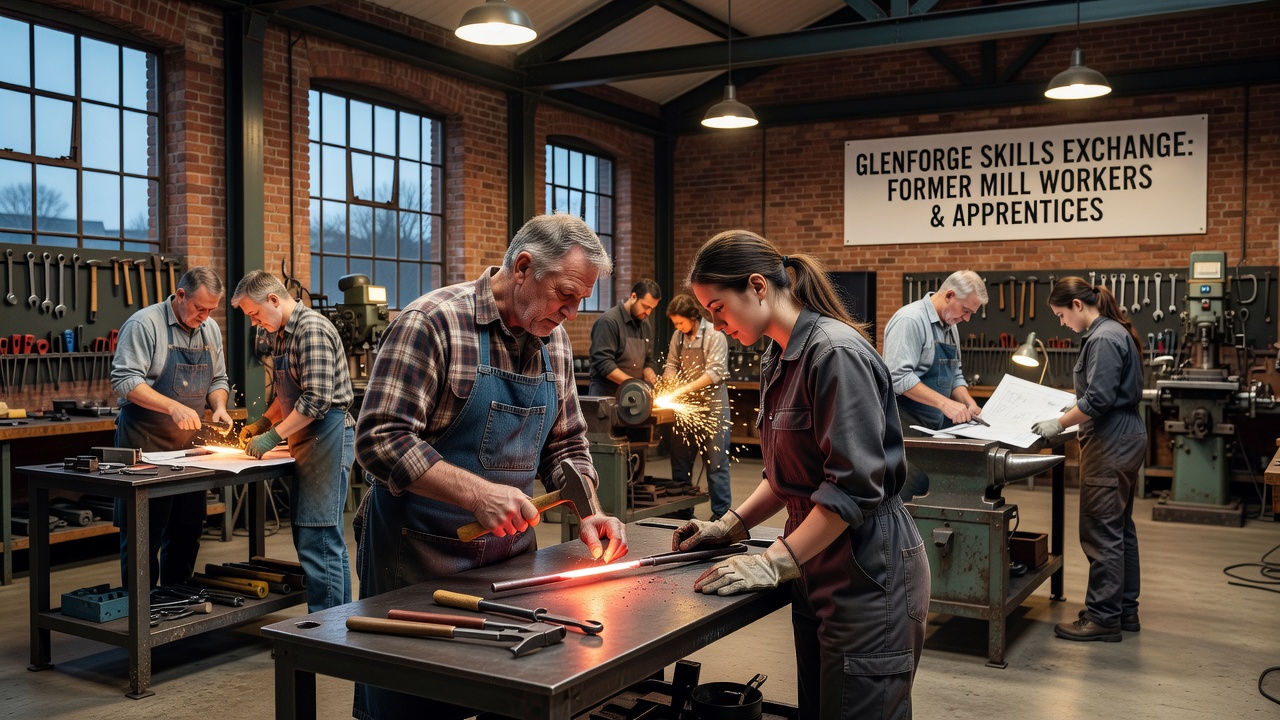
Former mill workers in Glenforge have maintained a practice of sharing specialized metalworking skills with local apprentices through informal evening sessions that take place several times each week, and this approach draws on decades of hands-on experience from the area's industrial past while adapting to current community needs. The sessions focus on techniques such as precision forging, heat treatment processes, and custom tool fabrication that originated in the mills along the river, and participants gather in repurposed workshop spaces where equipment from earlier eras remains in active use.
Historical Context of Metalworking in Glenforge
Mill operations in Glenforge once employed hundreds in metal fabrication roles tied to textile machinery production and agricultural equipment, and records from local archives indicate that these facilities operated continuously from the mid-19th century until the late 20th century when economic shifts led to closures. Many of the workers who remain active today began their careers in those same buildings, and they now transmit knowledge that includes methods for working with wrought iron and early steel alloys that modern vocational programs often overlook. Data from regional employment studies shows that traditional metal trades have seen renewed interest among younger residents seeking alternatives to standard manufacturing roles.
Structure of the Evening Sessions
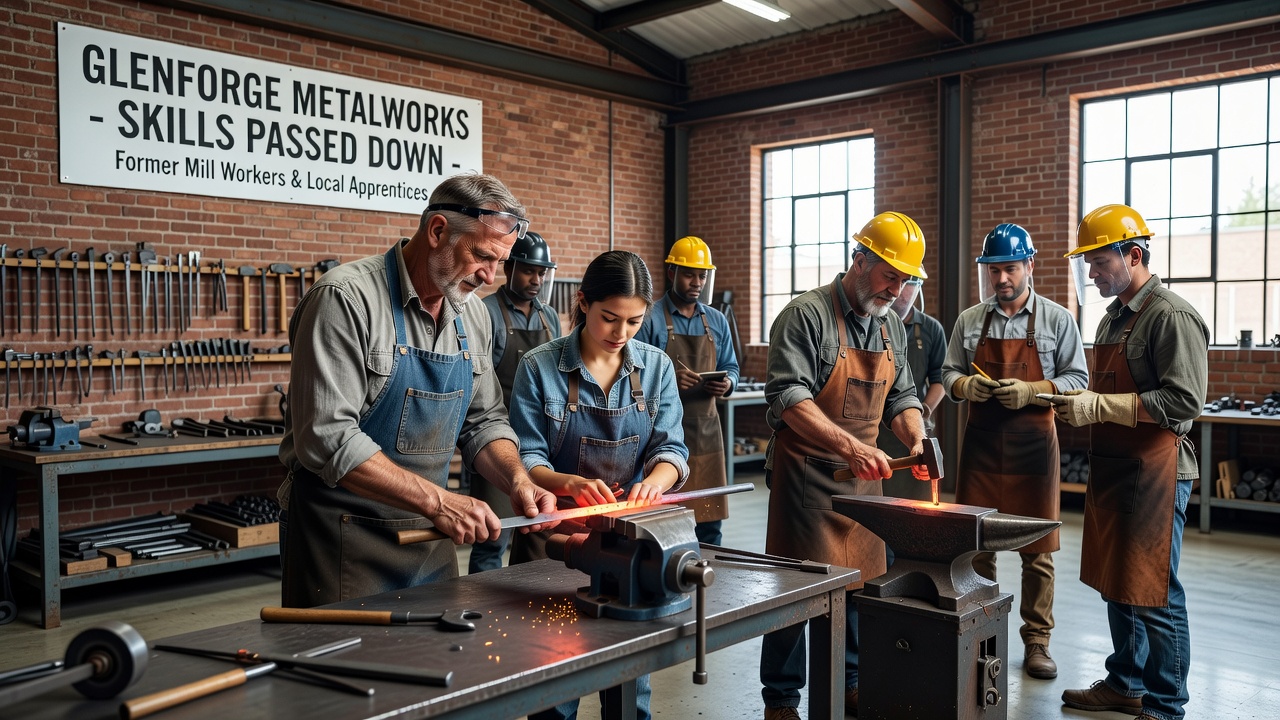
Apprentices arrive after standard work hours and receive guidance directly from retired mill staff on tasks like setting up forges, controlling temperatures during tempering, and finishing edges on blades or fittings, while the format stays flexible with no fixed curriculum or enrollment fees. Sessions typically run for two to three hours and accommodate small groups of four to six people at a time so that each individual can receive direct observation and correction on their technique. Equipment includes original anvils and hammers preserved from the mill era alongside newer safety gear that meets current occupational standards, and the combination allows apprentices to experience authentic workflows without the constraints of formal classroom settings.
Skills Transferred and Methods Used
Key competencies covered range from reading grain structure in heated metal to creating custom jigs for repetitive tasks, and these build on foundational knowledge that apprentices may have gained through basic welding courses at nearby technical colleges. One long-term participant who started as an apprentice five years ago now assists in leading demonstrations on pattern welding, and this progression illustrates how the informal model encourages skill layering over time. Observers note that the absence of graded assessments lets learners focus on practical outcomes such as producing functional components for local restoration projects.
According to reports issued by Cedefop, informal apprenticeship arrangements in industrial heritage communities across Europe have contributed to higher retention rates in craft trades compared with classroom-only pathways. In Glenforge the evening format aligns with similar patterns by allowing participants to apply new techniques immediately to personal or community projects, and this direct application reinforces learning without additional structured evaluation.
Community Participation and Recent Developments
Local residents supply materials through donations of scrap metal and tools, and this support network has expanded since the sessions began gaining visibility through word-of-mouth referrals. By October 2026 the program is expected to incorporate demonstrations tied to ongoing bridge restoration work in the area, giving apprentices opportunities to contribute components that meet engineering specifications while continuing their skill development. Figures from the National Centre for Vocational Education Research in Australia indicate that community-led skill transmission models often achieve broader demographic reach than institution-based programs, and Glenforge data aligns with this pattern as sessions now include participants ranging from recent school leavers to mid-career changers.
Challenges and Adaptations
Space limitations in the shared workshop buildings require careful scheduling, and weather conditions occasionally affect turnout when outdoor forging areas become unusable. Facilitators have responded by rotating indoor stations that focus on finishing and assembly work during colder months, and this flexibility keeps continuity without requiring major infrastructure investments. Those who have tracked participation over multiple years report steady enrollment despite these variables, suggesting that the informal structure itself contributes to sustained interest.
Conclusion
The evening sessions represent a direct continuation of Glenforge's industrial legacy through person-to-person knowledge transfer, and available records combined with participation trends show measurable continuity in specialized metalworking capabilities within the local population. As apprentices complete their training cycles they frequently transition into supporting roles or independent work, which extends the reach of the original mill techniques into new applications. This model continues to operate without formal accreditation yet produces tangible outputs that serve both heritage preservation and practical community needs.