Wendy Neumann · 22 October 2026
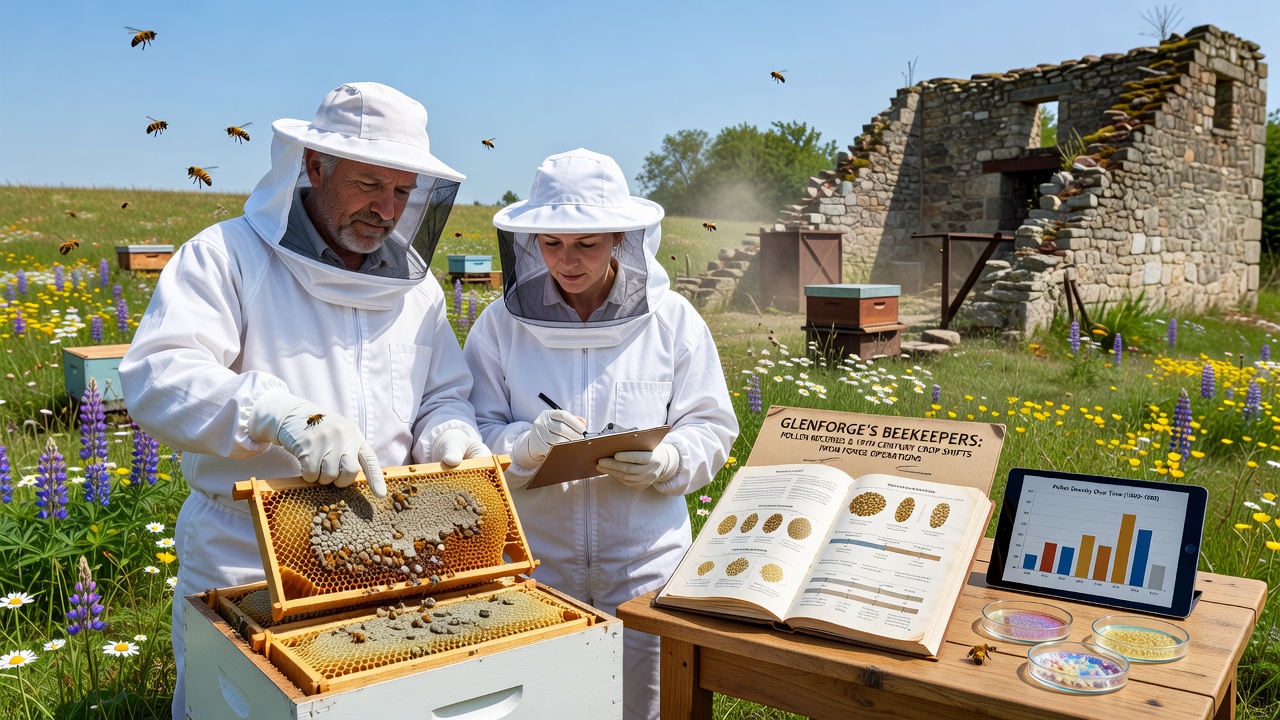
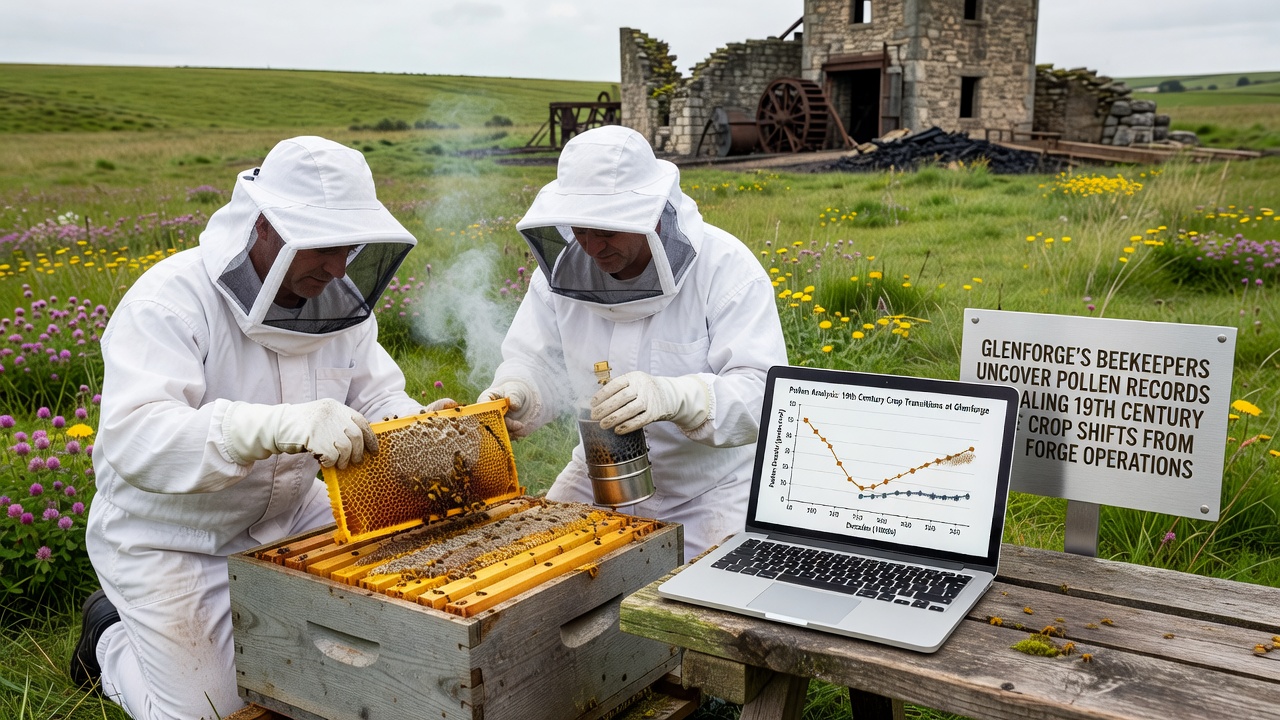
Glenforge's Beekeepers Uncover Pollen Records Revealing 19th Century Crop Shifts from Forge Operations
Local beekeepers in Glenforge began collecting pollen samples from hives positioned near the former industrial forge in early 2025, and by October 2026 these records had documented clear changes in surrounding vegetation that aligned with expanded forge activities during the 1800s. The analysis focused on preserved pollen grains that bees had gathered over successive seasons, which researchers then dated through stratigraphic layering within the comb structures. The historic forge site produced iron goods from the late eighteenth century onward, and land clearance plus atmospheric emissions from charcoal burning and metal smelting altered local plant communities. Pollen counts showed a measurable decline in certain cereal crops and an increase in hardy grasses and weeds that tolerated higher soil acidity and metal deposits. Those who've studied the samples note that the shifts appear most pronounced between 1820 and 1870, matching archival records of forge expansion. Researchers extracted cores from multiple hives and used light microscopy alongside DNA barcoding to identify species such as wheat, barley, and various meadow flowers. Cross-referencing these botanical profiles with soil samples taken from adjacent fields confirmed that forge-related pollutants had reduced the viability of nutrient-demanding crops while favoring more resilient species. Data from the project indicates that pollen diversity dropped by roughly twenty-eight percent during peak operational decades before partial recovery occurred after the forge scaled back in the 1890s.Methods and Collaboration
Beekeepers partnered with botanists from regional universities to process the samples, and the teams established protocols for non-destructive hive sampling that allowed continued honey production. Monthly collections took place at twelve apiary locations, each situated at varying distances from the forge ruins, so that distance-decay patterns in pollen composition could be mapped. Laboratory work included acetolysis to isolate pollen exines, followed by reference library comparisons that drew on collections held at several European herbaria. One study revealed that certain indicator species, including clover and buttercup, showed temporary spikes that coincided with periods when forge workers converted nearby pastures into charcoal production zones. The same cores also captured microscopic charcoal fragments whose size and morphology matched those produced by traditional bloomery furnaces. Observers note that combining these proxies with historical maps produced a detailed timeline of agricultural adjustment around the industrial core.